
The 7 Moments for Teams
Everyone in your team knows their own bit. Nobody has seen the whole client journey.
An eight-week programme for service teams. Together we map the seven moments where clients decide to stay, come back, recommend you or quietly drift away. You leave with clear owners and a 90-day plan.
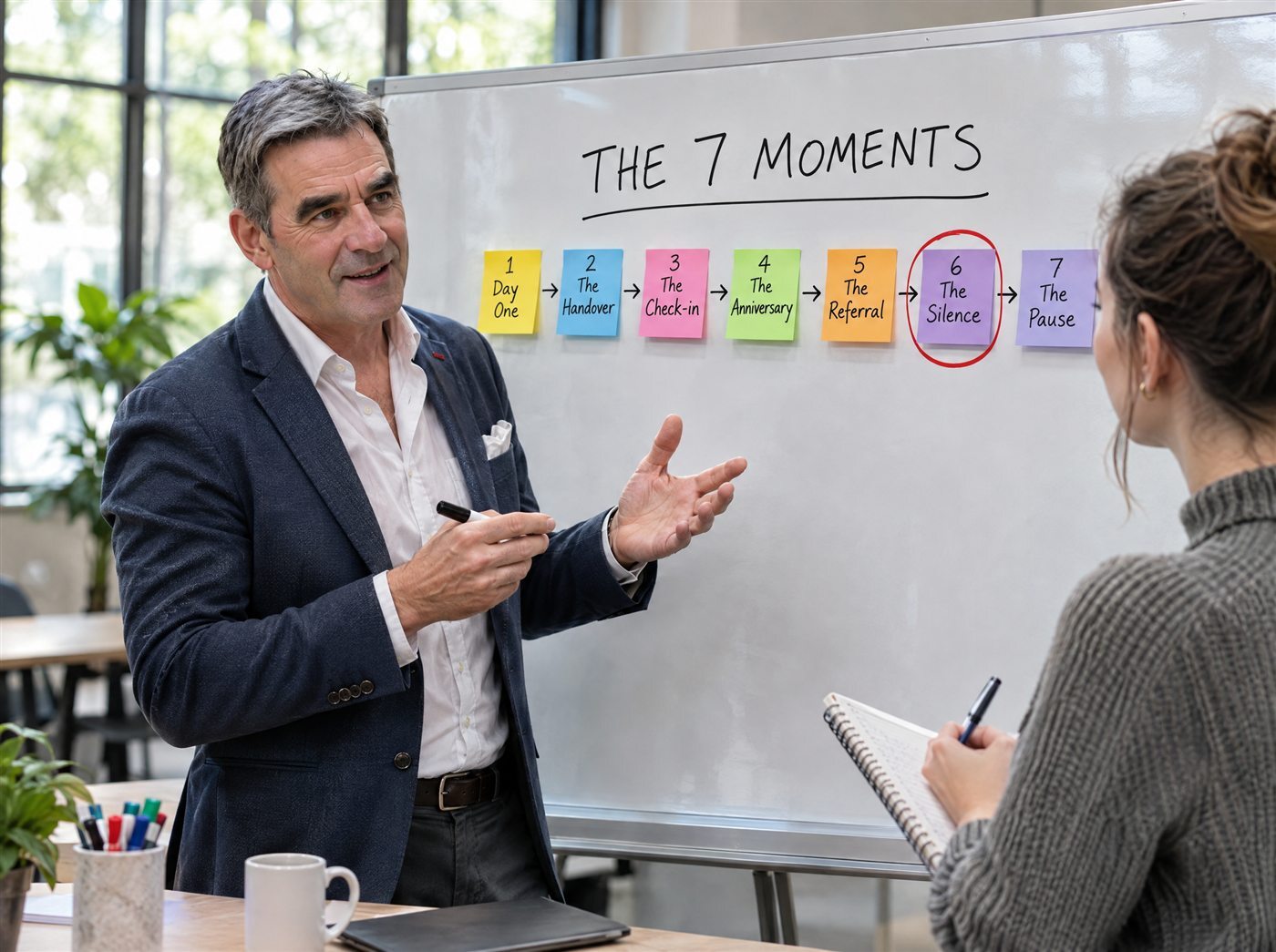
- 8 weeksone moment a week, then a plan
- 1 houra week, live with Neil
- Clear ownersso nothing falls between people
- From £6,000per team, not per head
Clients don't experience you as a pipeline. They experience you in moments.
The first reply. The first fortnight after they say yes. The long, quiet middle. The renewal date. The day they go silent. Get those moments right and people stay, come back and bring others. Miss them and they drift away, usually without a complaint, and nobody notices until the numbers move.
Most organisations design the sale with care and then, in their own words, "muddle through delivery". The moments don't break inside one team. They break at the handovers, where nobody owns what happens next.
Buying a CRM won't fix that, any more than buying Photoshop makes you a photographer. The design happens on the whiteboard first. That's what these eight weeks are for.

I've never seen the whole process, only my bit.
What I heard again and again when I flew with crews to see how a process really worked. Two groups were fixing the same problem every day, in two different ways, in two different logbooks. Each did its job well. Nobody owned the whole thing.
For service businesses with a team of about 5 to 70: music, arts, education, coaching, consulting and professional services. And for heads of marketing and operations in larger organisations who need everyone looking at the same journey.
What you have at the end of the eight weeks
Not a slide deck about customer experience. A working picture of your own client journey, agreed by the people who run it, with names and dates against the fixes.
A map of the seven moments
How your clients experience you today, from first enquiry to the day life gets in the way. Drawn from real clients, not the handbook.
The gaps, in plain sight
Where each moment breaks, usually at a handover between people or teams. Everyone sees the same gaps, so nobody has to argue them into existence.
Clear owners
Not someone to do all the work. Someone who makes sure it happens and notices when it doesn't.
A 90-day plan
Three quick wins for the next fortnight with no new software, three bigger fixes with an owner and a date, and one thing to stop doing.
A short report for leadership
What we found, what it's costing you and what comes first. Clear enough to decide on in one meeting.
How a week works
About an hour and a half per person, per week. Everything lives in one private online space, so nothing gets lost in email.
- 10 min
Read the primer
A short read on the week's moment: why it breaks, a real story and four questions to think about.
- 60 min
Map it together
A live session with Neil. We trace real clients through the moment and map what happens, not what the handbook says.
- 15 min
Fill in your worksheet
Each person answers from their own seat. Colleagues see each other's answers, which is how the gaps between teams show up.
- 2 min
The weekly pulse
A few quick questions so we know what's landing, what isn't and what's changed.
Inside the live hour
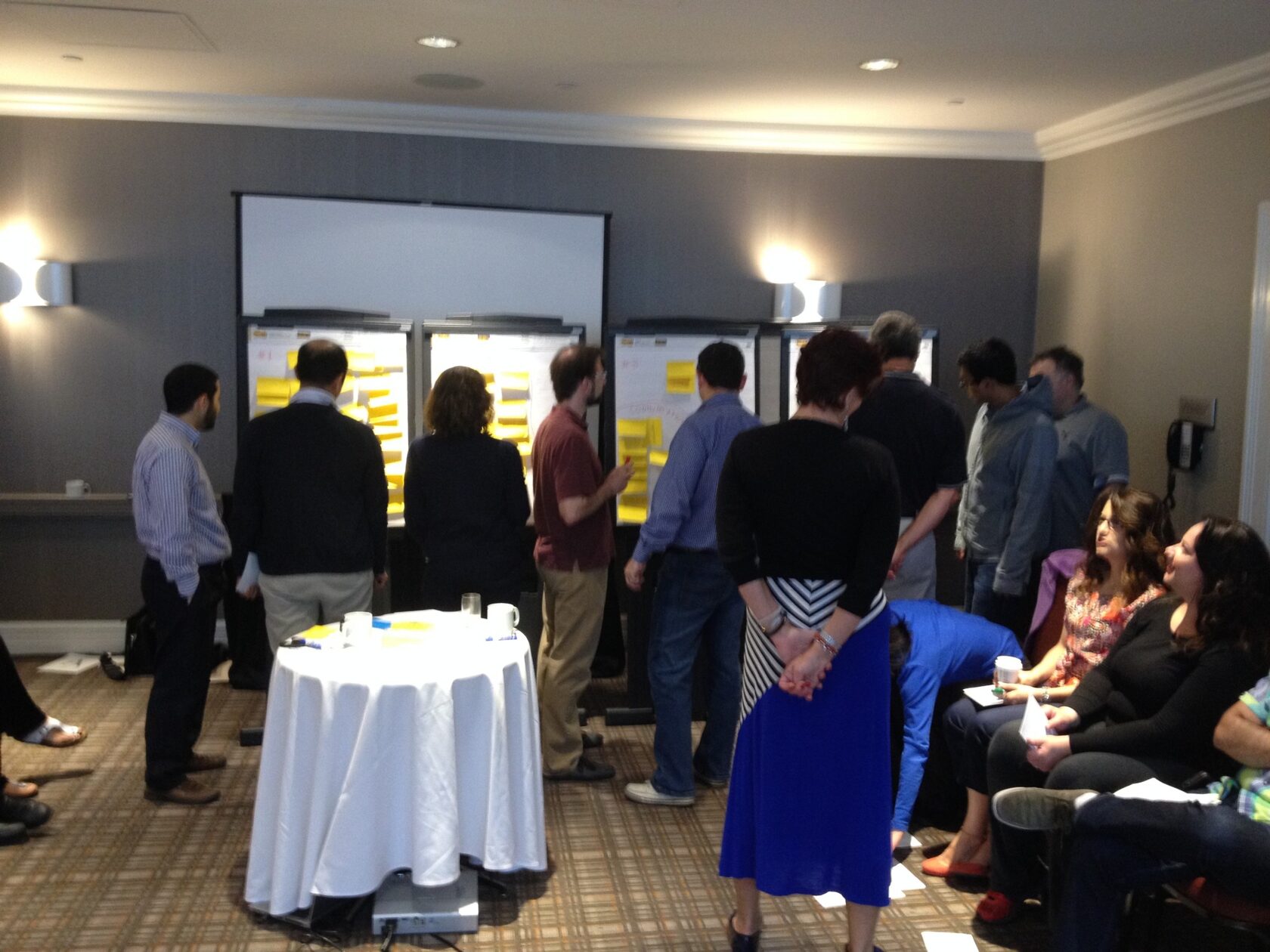
The same shape every week, so the team knows what to expect and the time goes on the work. One question runs through all of it: what happens next, from the client's side?
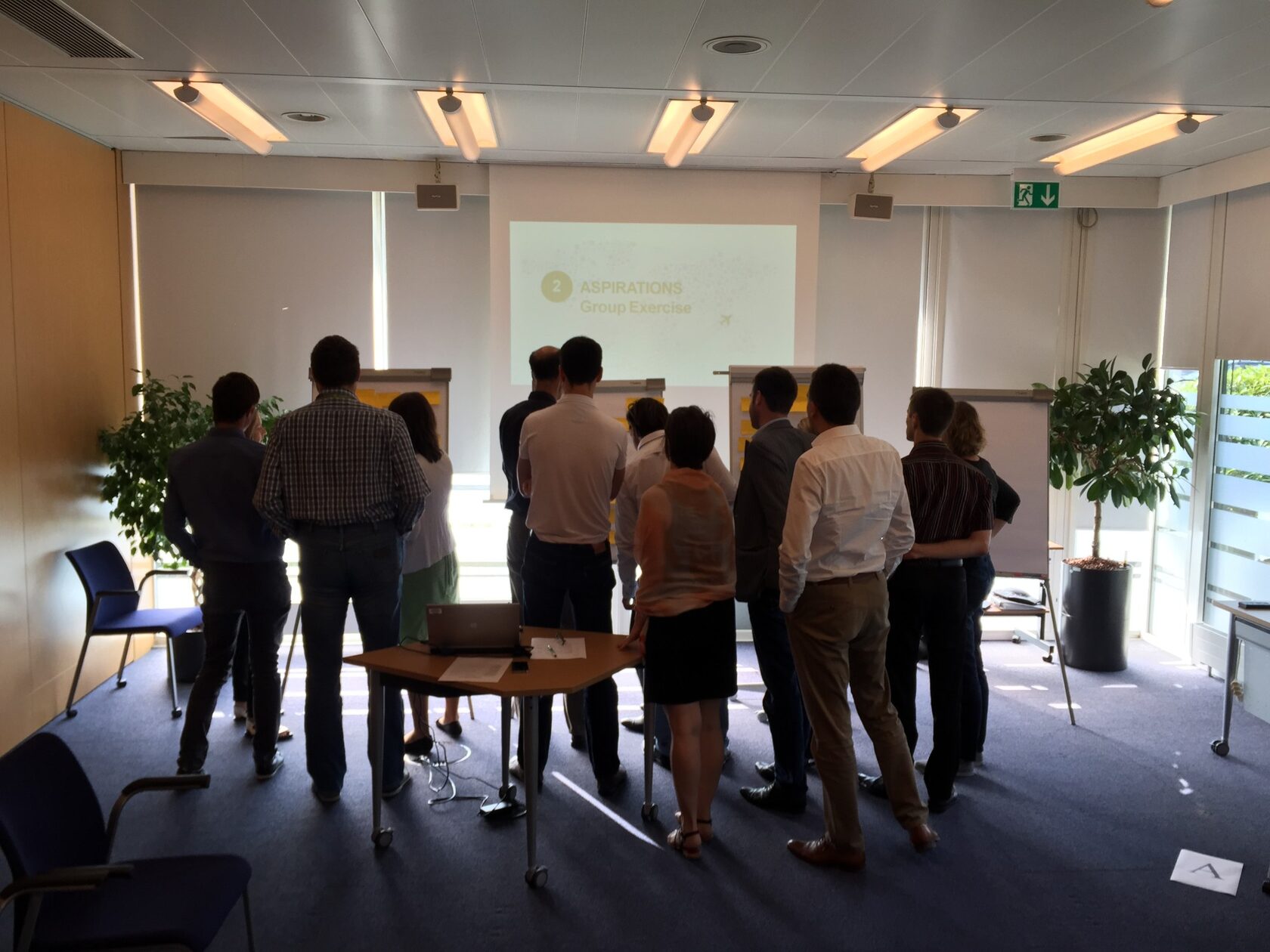
- 0–5Pulse. What last week's answers showed.
- 5–20Trace. Follow two or three real clients through this moment.
- 20–40Map. What should happen, who does it, what happens if it doesn't, and what should never happen.
- 40–55Gaps. Where it breaks between people or teams. We note the fixes but don't solve them in the room.
- 55–60One fix. The single change that would make the biggest difference.
Honest answers, by design
This only works if people describe what really happens, workarounds and all. So the leader who sponsors the programme sees progress and attendance, but not what people write. Nobody is being assessed. We're looking at the process, not at people.
The eight weeks
One moment a week. Each one ends with something the team can use straight away, so value builds from the first session, not just at the end.
Week 1
Day One
First contact. Whatever isn't captured now is lost for the whole relationship.
In the session
We trace three real enquiries from the last month, end to end. What did the client see next, and how quickly? What happened when they didn't reply?
You leave with
An owner for every way enquiries arrive, a plan for the enquirer who goes quiet, and the few facts worth capturing on day one.
Week 2
The Handover
The weeks after someone says yes, when trust is confirmed or quietly withdrawn.
In the session
We map a new client's first 14 days, and what the person delivering the work actually knows about them on day one.
You leave with
A handover that carries what the client said in the sales conversation, and a list of things that must never happen to a new client.
Week 3
The Check-in
The long, quiet middle, where most relationships fade with a shrug, not a complaint.
In the session
We look for reasons to get in touch when nothing is wrong, using what you already know about each client.
You leave with
Contact that is relevant, not just regular, and a clear line between what a system should remind you to do and what needs a person.
Week 4
The Anniversary
Renewal, rebooking, the date that matters to the client.
In the session
We list the dates in your clients' year you should never miss, find where they're recorded (if at all) and who gets reminded.
You leave with
The renewal work you're already sitting on, with an owner and a reminder far enough ahead to act on it.
Week 5
The Referral
Ask when clients are happiest, and ask the ones you'd like more of.
In the session
We work out when your clients are happiest and how you'd know, who asks for referrals today, and what happens to the person who makes one.
You leave with
A natural moment to ask, a way to say thank you, and a shortlist of the clients you want more of.
Week 6
The Silence
When a good client goes quiet. Your system can't show you what didn't happen.
In the session
We decide what "gone quiet" means for your clients, and how anyone in the team would notice. It's Line 38, for your whole team.
You leave with
A simple rule for spotting quiet clients, and a named person who reaches out with a reason, not a discount.
Week 7
The Pause
When life changes for a client. Six moments decide whether a client stays. This one decides whether they ever forgive you.
In the session
We follow what happens when someone hears that a client's circumstances have changed, and every automated message that keeps on sending.
You leave with
A way to pause everything for one client across every system, and one person who decides when to get back in touch.
Week 8
Owners, gates and the next 90 days
Pulling it all together.
In the session
We agree clear owners, put sign-off gates where small mistakes become expensive ones, and hunt for the step that exists only because it always has.
You leave with
Your 90-day plan: three quick wins, three bigger fixes, one thing to stop doing. Software comes last.
Where the method comes from
Twenty-plus years of mapping processes, from airline cockpits to arts organisations and music technology. The same lesson every time: the money is in the gaps between people.
$600,000
a year, from one phone call
A document was printed in five copies. The fifth was filed in a warehouse "in case anyone asks". Nobody ever asked. Asking why it existed saved around $600,000 a year.
60–70%
fewer lost leads
A three-person national training firm mapped its client journey before touching any software. Lost leads fell by 60–70% and the business nearly doubled in four months.
5,000
books, stickered by hand
My own worst moment: a placeholder barcode went to print because there was no gate where someone had to check. It's why week 8 is about gates.
The price
One price for the whole organisation, not per head, so nobody gets left out to save money. Pay in full, or in three monthly payments for the same total. Nothing is agreed until we've talked.
Whole organisation
13 to 30 people, across teams
£9,000
or three monthly payments of £3,000
Register your interestIncluded in both
More than 30 people? We'll run it in two groups and agree a price once we've talked.
- Eight live 60-minute sessions with Neil
- A private online space for the whole team
- Weekly primers, mapping worksheets and the team pulse
- Your map of the seven moments, and the gaps
- Clear owners and sign-off gates
- Your 90-day plan
- A short report for the leadership team
- A 60-minute review call 90 days later
It isn't for you if you want software switched on next week. If your journey is already mapped and you need the system built, start with Flowlu set-up instead.
Questions teams ask
Do we need a CRM first?
No. This programme deliberately comes before any software decision. Map first, then decide what a system needs to do. Some quick wins need no software at all.
How much time does it take?
About an hour and a half per person, per week, for eight weeks: a short read, the live hour and a worksheet. The live hour is the part to protect.
Who should take part?
Everyone who touches a client somewhere in the journey: whoever answers enquiries, sells, delivers, invoices and looks after renewals. The mix is the point.
Will our boss read what we write?
No, unless you all agree otherwise before we start. The sponsor sees progress and attendance, not answers. People are more honest about workarounds that way.
What does it cost?
£6,000 for one team of up to 12 people, or £9,000 for 13 to 30 people across teams. You can pay in three monthly instalments for the same total. See what's included.
What happens after the eight weeks?
You own the map and the plan, and we have a review call 90 days later to see how the fixes are going. If you then want a CRM built around it, the mapping is already done, so the build is faster. See Flowlu set-up.
What happens next for your clients?
Tell me a little about your team in a short form. I'll read it myself and reply to arrange a call, so you can ask your questions before anything is agreed. If it isn't the right fit, I'll tell you.
Register your interestAbout three minutes. Nothing is booked or charged. Neil Gowans, Obvi-us
